Sunday, 17 August 2014

London Chamber of Commerce and Industry

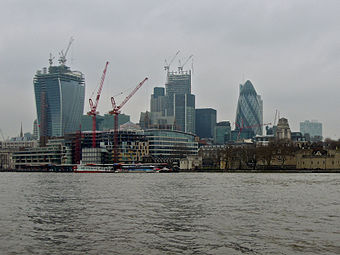
City of London from the Thames
Photo Wikipedia


Jane Lambert

The other day I received a copy of an email from our director of policy welcoming our "organization" to membership of the London Chamber of Commerce and Industry.  According to the Chamber's website it is the capital's largest independent networking and business support organisation representing the interests of thousands of companies, connecting over 500,000 business people  every year and offering a wide range of practical and professional services.

I have spent much of the morning exploring the website, particularly
I intend to make the most of our membership and participate in as many of those events as possible. It is a great opportunity to explain to business leaders what members of our profession can do for them (see IP Services from Barristers 6 April 2013 4-5 IP blog) and the different ways they can access our services from our workshops and pro bono clinics to our high level representation and consultancy.

Coincidentally, I downloaded and read yesterday Eddie Copeland and Cameron Scott's report Silicon Cities which is published by Policy Exchange. This report discusses how to support the development of tech clusters outside London and the South East of England. As I was born in Manchester and still live in the town where Last of the Summer Wine was shot (we actually have a real vineyard just outside by the way) that is a topic that is very dear to my heart. As I have argued elsewhere it is in the national interest to create a counterweight to London and this report suggests ways in which that can be done. But creating a counterweight does not mean creating a brake. On the contrary it means creating a partner for the capital.

I was pleased to read the Chamber's press release Time to give cities the powers to grow of the 9 July 2014:
"Having long campaigned for greater financial freedom for London, today's report represents a welcome indication that Parliament understands the benefits that fiscal devolution will bring to the capital, and England's other cities and regions."
I made exactly the same point in a question to Nick Clegg at the Leeds International Economic Conference a few days earlier (see "Power. Performance. Potential. Leeds Economic Conference" 5 July 2014 IP North West).  The idea of a North South divide in a country the size of Britain has always been absurd to me. It is good to see that we are all beginning to sing from the same hymn sheet at last.

Tuesday, 12 August 2014

What is Fintech? Will it be an Engine for Growth or a Seven Day Wonder?


Jane Lambert

Fintech is short for financial technology, that is to say payment systems, services, software and data analytics. According to Fintech The UK’s unique  environment for growth the industry is worth £20 billion with payments technology accounting for about half those sales. The same report states that the UK and Irish Republic are the fastest growing region for fintech and that £265 million was invested in the industry in 2013.

As a result of this investment boom there has been growing interest in fintech from government and investors. In a speech to Innovate Finance at Level 39 on 6 Aug 2014 the Chancellor of the Exchequer announced several new measures to encourage investment in fintech.  On 2 July 2014 Santander announced that it had set up a $100 million investment fund in London. There are now all sorts of fintech enterprises which are monitored by such companies as FinTechCity which publishes the annual Fintech 50.

Although London is an important market for financial technology it is important to note that there were only 3 British firms in 2013 FinTech 100 Rankings Released By IDC Financial Insights, American Banker, and Bank Technology News compared to 10 from India and many more from the USA. On page 11 of The Boom in Global Fintech Investment A new growth opportunity for London Accenture London identified the following challenges for London's fintech cluster:

  • London's fintech industry is relatively immature;
  • there are many first more time entrepreneurs than elsewhere in the world
  • it is harder for them to raise funding than their US counterparts.
In How far (if at all) is it possible to protect Innovation in Financial Technology? 12 Aug 2014 IP Yorkshire I spotted yet another difficulty, namely that it is much harder to obtain patent protection for fintech inventions than it is in China, Japan, Korea and the USA.

Interest in fintech has mushroomed and could subside just as quickly but until it does I shall be keeping an eye on the legal issues and particularly IP relating to this technology.  The name fintech is new but I have followed the topic ever since the early 80s when I was legal advisor to VISA for Europe, the Middle East and Africa. I wrote one of the first articles on the subject in EFTS: the Emerging Legal Issues LSGaz 1984 and I contributed a section on electronic banking to Butterworths Encyclopaedia of Forms and Precedents in 1985. If there is sufficient interest in the legal issues relating to fintech I shall try to hold a workshop or seminar on the topic in chambers. In the meantime here is a reading list which I shall no doubt extend from time to time. If anybody wants to discuss this article or the law relating to fintech in general he or she can call me during office hours on 020 7404 5252 or message me through my contact form. You can also tweet me, write on my wall or send me a message through G+Linkedin or Xing.

Further Reading

General Introductions
FinTechCity  The FinTech 50 (downloadable from Welcome to The FinTech 50)
IPC Financial Insights and others 2013 FinTech 100 Rankings 7 Nov 2013

Press Releases
Santander  "Santander to launch a $100M fund for fintech companies out of London" 2 July 2014

Speeches
George Osborne "Chancellor on developing FinTech"  6 Aug 2014

Intellectual Property

Articles

Presentation

Wednesday, 16 July 2014

London is Number 1 in the UK for Branding and Design

Piccadilly Circus at Night
Source Wikipedia


Jane Lambert

The Intellectual Property Office's Facts and Figures 2012-2013 were published last month and they make interesting reading. Businesses in London applies for 12,669 UK trade marks (up from 10,440 the previous year) and received 10,583 registrations (8,680 the previous year). That is more than any other region of the United Kingdom. The South East came second with 6,197 applications and 5,258 registrations and the East of England third in the number of applications (3,227) and the South West in the number of registrations (2,951).

London was also top in the number of registered design applications (1,153 compared to the South East's 1.066) but second to the South East in the number of registrations (720 in 2013 compared to the South East's 883).

London came second to the South East in the number of UK patent applications (2,588 in 2013 compared to 2.522 the previous year thereby bucking the national trend) and grants (346 in 2013). The comparable figures for South East England were 2,822 applications and 346 grants.  

We can assist London artists, designers, inventors, entrepreneurs and investors with our IP clinics at Middlesex University and our talks and publications all of which are free of charge. For our chargeable services see "IP Services from Barristers" 6 Apr 2013 4-5 IP.  If anyone wants to discuss his article or any patent, trade mark, design or other intellectual property matter he or she should call us on 020 7404 5252 or get in touch through my contact form. You can also tweet me, write on my wall or send me a message through G+, Linkedin or Xing.

Sunday, 13 July 2014

Computer Law - Things aint what they used to be

Manchester Mark 1 - one or the world's first computers
Source Wikipedia


Jane Lambert

When I was first called to the Bar I was a very rare bird indeed: a barrister who knew something about computers. I did not know all that much for I did not read computer science at university but I knew more than most having been one of the first children on the School Mathematics Project which taught binary and hexadecimal arithmetic, set theory and groups, linear programming and Boolean algebra. I set up a mathematical society and participated from time to time in a club that made things including a simple computer in 1965. I was encouraged to take an interest in computing by my father who had seen Manchester Mark 1 when he was a research student at Manchester University. I maintained my interest when I was an undergraduate at St Andrews and a graduate student at UCLA. Indeed I think I must have sent one of the world's first emails when I requested a book from the UC Berkeley library in 1972 or 1973 for I later found out that both UC campuses had participated in the DARPANET which was the forerunner of the Internet. In my first job at the Economist Intelligence Unit I learned about remote sensing when I assisted in one of the early projects in that technology. I was one of the early adopters of micro-computer technology having bought myself a Commodore 64 which nearly sent the TV up in smoke as I was setting it up and later an Amstrad 8256 on which I taught myself to write simple programs. I joined the British Computer Society as an affiliate at about that time and rather fancied that if I ever failed at the Bar I could retrain as a systems analyst or at least a programmer.

In the early days before the Worldwide Web when home computing was in its infancy computer law was simple. It was mainly about computer procurement though there were occasional disputes over copyright and the development of the first computer networks gave rise to concern in a number of countries over privacy. Procurement was a matter for businesses because only big companies, governments and a few other public sector institutions could afford computers. Most disputes like MacKenzie Patten & Co. v. British Olivetti Ltd 19 May 1984 in the UK and Chatlos Systems, Inc. v. National Cash Register Corp., 635 F.2d 1081 (3d Cir. 1980) in the USA arose from a mismatch between customers' unrealistic expectations and salesmen's extravagant claims. Looking back at my old textbooks from the early 1980s such as Colin Tapper's Computer Law, Morgan and Stedman on computer contracts and Michelle Rennie's precedents I recall how we used to divide computer contracts into hardware, software, hardware maintenance, software maintenance, bureau processing and turnkey contracts. We agonized over whether software was a good and whether liability for breach of contract could be excluded from the Unfair Contract Terms Act 1977 under para 1 (c) of Sched 1 on the basis that a software contract was a software licence.

The arrival of the Internet changed all that. The public are better informed about computers and know what computers can and cannot do. A lot of software including applications used by businesses for word processing, spreadsheets, databases, email and presentations are now free at the point of use or cost very little. Save for big ticket public sector procurements which still somehow seem to go wrong computer supply disputes hardly ever arise because much of the processing takes place remotely and most applications - particularly those that are free or open source - are expendable and easily replaced if they fail to meet expectations. The sort of contracts that I am asked to draft or review nowadays tend to relate to e-commerce and the Internet. The big ticket disputes involving the public sector to which I referred earlier tend to be resolved through negotiation, mediation and other methods of alternative dispute resolution. It is several months since I last settled particulars of claim in a computer supply dispute in the Technology and Construction Court.

An area that still seems to lead to disputes is web design. In 2011 and 2012 I wrote a series of articles for web designers and their customers which I posted on J D Supra:
I have had a look through those articles and find they are still relevant though some details need to be updated. For instance, the Patents County Court has been replaced by IPEC (the Intellectual Property Enterprise Court) and IPEC has a small claims track whose procedure I discussed in "How to bring or defend a small Intellectual Property Claim in the Intellectual Property Enterprise Court" 11 May 2014 and "How to take proceedings in the IPEC Small Claims Track"  12 July 2014.

Should anybody want to discuss this article or any of he topics mentioned or referred to call me on 020 7404 5252 during normal business hours. You can also contact me through my contact form or message me through Facebook, G+, Linkedin, twitter or Xing.

Sunday, 11 May 2014

How to bring or defend a small Intellectual Property Claim in the Intellectual Property Enterprise Court

Jane Lambert

This article is for those who find themselves in the Small Claims Track of the Intellectual Property Enterprise Court ("IPEC"). I have written it with litigants in person in mind but it should also be useful to lawyers who do not specialize in intellectual property ("IP") work and patent and trade mark attorneys who do not litigate regularly in the civil courts.  As I am trying to make this article as jargon free as possible I should add that "litigants in person" are parties to disputes who represent themselves in court

How to use this Article
There are already two excellent guides that you should download and read:
The General Guide applies to all small claims and not just IP ones.  The IP Guide is a little out of date in that it refers to the small claims track of the Patents County Court.  The Patents County Court was abolished on the 30 Sept 2013 and replaced by IPEC immediately afterwards. Nearly all the rules that applied to the Patents County Court apply to IPEC including the provision of a Small Claims Track,

I should stress that this article is intended to supplement those guides and not to be a substitute for them.  

Do you need a Lawyer?
It is nearly always a good idea to consult a lawyer if you think that you may have to go to court.  However, many of those who come before the IPEC small claims represent themselves. That is because the cost of hiring a lawyer is often disproportionate to the sums of money at stake and only a fraction of that cost can ever be recovered from the other side. As many parties do act for themselves the strict rules of evidence and procedure that apply in other courts are relaxed in the small claims track. However, even in the small claims track difficult points of law and procedure can arise.  It is possible to hire a lawyer (particularly a barrister under the Public Access rules) to help with part of the litigation and you should certainly consider that option. Paragraph 1.9 of the IP Guide and Section 2 of the General Guide contain more information on how and where to get legal advice and representation.

Have you got a Case?
One of those difficult points upon which you should take specialist legal advice if you possibly can is whether you have a case. The fact that you have suffered (or been threatened with) what you believe to be an injustice may not be enough. Courts have to apply the law which can lead to results that you may regard as unfair but, if that is the case, the sooner you find that out the better.

There are any number of reasons why a claim may fail.
  • The law may not be what you believe it to be. Copyright, for example, prevents people from copying certain types of literary or artistic work. It does not prevent others from making similar works if they can do that without copying the original.  
  • Maybe your right of action has not yet arisen. You can claim damages for infringement of a trade mark before the mark has been registered but your right to sue does not arise until after registration of the mark. 
  • Conversely, your claim may be statute barred, that is to say it should have been brought within 6 years of the wrongdoing. 
  • Perhaps the wrongdoing took place abroad (which could include Scotland or Northern Ireland) in which case you may have to sue there rather than here. 
  • Possibly you have agreed to resolve disputes of the kind in question to arbitration or some other method of dispute resolution in which case the court will expect you to get on with it in that forum.
These and many other potential problems are what a lawyer will look out.

You should also be aware that IP law contains a number of traps for the unwary. One of those traps is that you can actually be sued for threatening to bring an action for patent, registered design, unregistered design rights and trade mark infringement if your claim turns out to be groundless. This is called a "threats action". There is no such thing as a "threats action" in any other area of law.

You can get advice on those points for just a few hundred pounds and most clients find such advice is worth every penny. There are also a number of pro bono advisory schemes where you may even get the advice that you need for free. Paragraphs 2.2 of the General Guide and 1.9 of the IP Guide provide help with that.

Pre-Action Correspondence
Going to court is supposed to be a last resort and you will be expected to have done everything in your power to avoid legal proceedings.

As a first step you should write a letter before claim in accordance with paragraph 2 of Annex A of the Practice Direction - Pre-Action Conduct. It is particularly important to comply with that requirement in IPEC because CPR 63.22 (3) allows the defendant another 28 days to lodge a defence if you fail to do so. In composing your letter before claim it may be helpful to consult the Code of Practice for Pre-Action Conduct in Intellectual Property Claims which you can download from Reed Smith's website.

If you receive a letter before claim you must acknowledge it in accordance with paragraph 3 of the Annex within 14 days and respond in full in accordance with paragraph 4 within 28.

You should read the other side's letter very carefully and not dismiss it just because it does not sat what you want to hear.  If it disputes your case check the facts or legal arguments upon which the other side relies. If you find that some substance in what they say then you nay have to modify your claim or defence. If they suggest mediation, a meeting or other alternative means of resolving your dispute you must consider it very carefully.  If you reject their suggestion you must have a good reason for doing so.

Starting the Claim
Ignore the first 4 sub-paragraphs of paragraph 4.1 of the General Guide and any reference in the IP Guide to the Patents County Court. IPEC (including the Small Claims Track) is actually part of the High Court and it is based in the Rolls Building in London. IP claims can be brought in the Birmingham, Bristol, Caernarfon, Cardiff, Leeds, Liverpool, Manchester, Mold, Newcastle upon Tyne and Preston County Courts and the High Court offices known as "district registries" located in those cities and towns but there is rarely any point in suing in any of those courts particularly, if at least one of the parties is in London or South-East England. The provisions of CPR Part 63 that expedite procedure and limit costs do not apply to those County Courts or District Registries. A claim in any of those County Courts or District Registries will often be transferred to to IPEC either upon the request of one of the parties or its own initiative.

Statements of Case
These are formal statements by each party of its claim or defence.  They are often referred to as "the pleadings" which is the old name for such documents.   They should be drawn up very carefully. This is another matter upon which you should consider taking specialist legal advice.

The statement of case of the person who brings the action  (nowadays called "the claimant" but formerly "the plaintiff") is known as the Particulars of Claim. Read Section 4 of the General Guide (particularly paragraphs 4.4 to 4.10) and paragraphs 2.2 to 2.4 of the IP Guide for guidance on form and content.  In addition to the matters mentioned in those paragraphs, CPR 63.20 (2) requires you to state whether you have sent the person from whom you are claiming relief ("the defendant") a letter before claim of the kind that I have described above.  Also, CPR 63.27 (1) (c) requires you to state that you wish the claim to proceed in the Small Claims Track of IPEC in the Particulars of Claim.

If you are a defendant you usually have to respond to the Particulars of Claim by filing a document known as "an acknowledgement of service" with the court. If you believe that the claimant has no right to sue you (either because you are outside England and Wales and the alleged wrongdoing also took place elsewhere or for some other good reason) you may sometimes apply to have the claim struck out but that procedure is very risky and you should certainly seek legal advice before taking that step.

Otherwise you must follow up the acknowledgement of service with a document known as "The Defence" that indicates the parts of the Particulars of Claim that you admit, those that you deny and those that you can neither admit or deny and require the claimant to prove.  If you want to make a claim against the claimant you must combine your Defence with a Counterclaim.  You will need to counterclaim if you believe that the claimant's trade mark is invalid or should be revoked for some other reason. If you are relying on certain grounds of defence you must plead them specifically in your Defence. If you object to the case proceeding in the IPEC Small Claims Track you must say so and give your reasons in the Defence.

Whatever your defence the most important thing to remember is to file and serve it in time.   Pay particular attention to paragraph 2.4.2 of the IP Guide.

Case Management
In most IP cases there is a hearing known as the Case Management Conference ("CMC"). That does not usually happen in the Small Claims Track.  Instead, the court reads the parties' statements of case and any other documents that may have been submitted by the parties and makes directions for the disposal of the case.  Typical directions are set out in paragraph 6.5 of the General Guide.  The court will order a preliminary hearing only if an important procedural issue arises such as an objection to the case proceeding in the Small Claims Track or a request is made for a party to disclose the existence of, and produce, a specific document. Such hearings usually take place in one of the court rooms of the Royal Courts of Justice in the Strand.  It is very important to comply with the directions of the court - especially with its deadlines - if the case is to proceed on time and on budget.

ADR
Sometimes the court will invite the parties to resolve their dispute through mediation or some other form of alternative dispute resolution or "ADR".

There are essentially two kinds of ADR:
  • those that facilitate negotiation such as mediation or conciliation; and
  • those that refer the dispute to a trusted third part such as arbitration or expert determination.
The Intellectual Property Office provides a good and inexpensive specialist mediation service as do our chambers (see "Our IP and Technology IP Dispute Resolution Team" 28 Dec 2013 4-5 IP). We also run a specialist arbitration service (see "Arbitration of Intellectual Property and Technology Disputes" 6 Apr 2014).

Interim Injunctions
In many IP disputes, claimants seek orders known as "injunctions" to stop the other side from infringing their IP rights until trial or other resolution of the dispute.  Often such injunctions (known as "interim injunctions" resolve the dispute once and for all. It is not possible to get an interim injunctions in the Small Claims Track. If you need such an injunction you must bring your case in a list known as the "multitrack" in IPEC or any of the other courts that can hear IP actions.

The Hearing
Unless the court decides, or the parties agree, to resolve the case without a hearing, the parties and their witnesses will be heard in  the Royal Courts of Justice. Section 8 of the General Guide tells you what to expect. The judge will usually sit at  the associate's desk rather than the judge's chair and he or she and any lawyers present will wear business suits rather than robes. If both sides are represented by lawyers the hearing will be very much like any other trial in the civil courts except that the proceedings will rarely last beyond an afternoon. If one or more of the parties represent themselves the judge may relax the strict rules of evidence and procedure and take the initiative

Legal Advice and Representation
IP law is complex and not all lawyers are familiar with it.  Patent and trade mark attorneys are familiar with IP law but not necessarily with civil litigation.  You need someone who knows both IP law and civil litigation.

Most barristers who specialize in IP law are members of the IP Bar Association. Some of those barristers can accept instructions directly from the public without the intervention of a solicitor or patent or trade mark attorney. Since January 2014 it has been possible for barristers to apply to conduct litigation, that is to say the right to issue proceedings and do other work that has traditionally been done by solicitors.

Many but by no means all of the law firms that specialize in IP belong to the Intellectual Property Lawyers Association.  These include some of the most prestigious but also some of the most expensive in the UK. Shop around and check rates before engaging a solicitor.

Some but not all patent and trade mark attorneys act as advocates and conduct litigation.  Again, the best advice is to shop around.

Further Information
I have written two other articles that may help:

If you need any more guidance, give me a ring on 020 7404 5252 during office hours or fill in my contact form. You can also tweet me, write on my wall or send me a message through G+, Linkedin or Xing.

Sunday, 6 April 2014

Arbitration of Intellectual Property and Technology Disputes

Jane Lambert


Arbitration is a method of resolving disputes. It arises out of an agreement between two or more parties to refer an existing or any future dispute that may arise to a third party known as the arbitratior ("arbiter" in Scotland) who will decide the case on its merits after considering evidence and arguments. The arbitrator's decision, which is known as an award, is enforced in England and Wales in the same way as a judgment (see s.66 (1) of the Arbitration Act 1996).  Her Majesty's Government is party to an international agreement to which most countries in the world belong known as the Convention on the Recognition and Enforcement of Foreign Arbitral Awards (New York, 1958) (the "New York Convention") whereby each party agrees to enforce in its territories arbitration awards made in accordance with its provisions.

What are the Advantages of Arbitration?
Because the arbitration arises out of an agreement between the parties, it is they rather than an outside agency such as HM Courts and Tribunals Service who control the process. That means that the dispute can be determined in a manner and at a time of the parties' choosing by a tribunal of their choice whose competence, experience and impartiality they can trust rather than by the judge to whom their case is allocated who may or may not have relevant knowledge and experience who will apply rules of procedure and evidence that may not be relevant when the case comes into his or her list. Arbitration can therefore be quicker, cheaper and less formal than litigation and render better justice though much will depend on the terms of the arbitration agreement and the skills, knowledge and experience of the arbitrator. In most cases arbitrations are conducted in private so that nobody but the persons involved in the process hear damaging or embarrassing disclosures. That often makes it easier for them to maintain or renew a business relationship once the dispute is resolved.

And the Disadvantages?
These are largely the converse of the advantages and usually result from a badly drawn up agreement or an incompetent, inexperienced or less than impartial arbitrator.  The costs and delay can be greater than the parties would have been incurred had they gone to court and the decision may be less than fair or wrong in law. In nearly every case the parties have to pay a fee to the arbitrator and hire the room in which the arbitration takes place and the office equipment, stationery and other consumables that the arbitrator uses. The privacy of the arbitration may hide from the public facts and matters that should be made known and indeed may remove one of the incentives to early settlement. Often the remedies available to the arbitrator and the opportunities to challenge an award are limited.

What Sort of Cases are suitable for Arbitration?
Generally these are cases in which the parties have agreed to resolve any disputes that may arise by arbitration at the time they made their contract. One such agreement might be for the supply of computer equipment or services where the supplier is in a developed country and the customer may be a government department in a less developed country where the judges are not known for their independence of the executive. Another might be a licensing agreement where the parties have done good business with each other before and expect to do so again. However, the parties can agree to refer an existing dispute to arbitration. One instance in which they may decide to do so is after they have exchanged letters of claim and response in accordance with the Practice Direction - Pre-Action Conduct, seen each other's evidence, tried unsuccessfully to resolve their dispute through negotiation. They may try arbitration because they do not want to go to court since the case turns on issues of law or fact that could be solved quickly, cheaply and easily by an experienced specialist arbitraior.

What Sort of Cases are unsuitable?
These are generally cases where the parties do not trust each other (which will include most infringement actions) where one of the parties wants an injunction to restrain the other side from damaging its interests.  Having said that s.48 (5) of the Arbitration Act 1996 confers upon an arbitrator (subject to any agreement to the contrary) the same powers as a judge:
"(a) to order a party to do or refrain from doing anything;
(b) to order specific performance of a contract (other than a contract relating to land);
(c) to order the rectification, setting aside or cancellation of a deed or other document."
 Moreover the civil courts have power under s.44 (2) (e) to grant injunctions in support of an arbitration. It should also be noted that arbitration is a procedure that can be used at any time. There is no reason why one part of the dispute cannot be resolved by litigation, negotiation or mediation and another by arbitration. Intellectual property disputes are usually determined in two phases: the first stage being to decide liability and the second the pecuniary remedy. The taking of an account of profits or an inquiry as to damages is a technical matter involving forensic accountants that could often be conducted more cheaply and quickly by an arbitrator.

Where to find an Arbitrator
Moat arbitrators in the UK are trained and accredited by the Chartered Institute of Arbitrators ("CIArb") which keeps a searchable database of members with particulars of their qualifications. An international panel of arbitrators, mediators and other dispute resolution providers who specialize in intellectual property and technology is maintained by WIPO ("World Intellectual Property Organization") the UN agency for intellectual property. As you can see, I am a member of that panel.  And then there are us (see "Our IP and Technology Dispute Resolution Team" 28 Dec 2013 4-5 IP). Our members include Professor Louis Harms, the former Deputy President of the Supreme Court of Appeal of South Africa, Thomas Dillon who was a senior in-house legal advisor to the trade association of the US film and TV industry as well as me.

How to Appoint an Arbitrator
If you have an arbitration agreement it will probably set out a procedure for appointing an arbitrator. Typical language will be
"Any dispute or difference shall be referred to arbitration before a single arbitrator agreed by the parties of in default of agreement within 28 days appointed by the Chair for the time being of the Bar of England and Wales."
The usual procedure is for the parties to exchange lists of names and curricula vitarum. If the same name appears on both lists he or she is likely to become the arbitrator. If the parties cannot agree the Chair of the Bar or other appointing party will select a suitable candidate from his or her list. Once the arbitrator has been agreed or appointed the parties may enter a supplemental agreement within the arbitrator covering such matters as his or her fees and the date, time and place of the arbitration.

What happens next?
That depends on the terms of the arbitration agreement and the rules that the parties have agreed to adopt. The arbitration may be conducted entirely in writing, orally or partly orally and partly in writing. Usually, the complainant has to send a statement of case to the arbitrator and the other side to which the respondent has to reply within a specified time. Such statements of case are very much like the particulars of claim and defence in civil litigation. After statements of case have been exchanged or indeed at any other time the arbitrator may invite the parties to a case management meeting or he or she may give directions on his or her own initiative in writing. In some cases, disclosure of documents and the exchange of witness statements and experts' reports may be ordered. In other cases, the arbitrator may order documents to be attached to the statements of case or witness statements. If the parties agree, or the arbitrator decides, that witnesses' testimony needs to be tested by cross-examination he or she will order a hearing which will be conducted very much like a trial. Arbitrators have power under s.38 (5) of the Arbitration Act 1996 to examine witnesses on oath and the civil courts have power under s.43 to compel the attendance of witnesses. Once the arbitrator has considered the evidence and arguments he or she will draft the award. The arbitrator has power under s.56 to without publication of his award until his or her fees have been paid. If as is frequently the case the person paying the arbitrator is the party who succeeds in the arbitration the arbitrator's fee (or at any rate a portion of it) can usually be recovered from the other side. The circumstances in which an award can be challenged are set out in s.67 and s.68 or they may be provision for an appeal or challenge in the rules or arbitration agreement.

Do you want to learn more?
if you happen to be anywhere near Sheffield tomorrow evening you can hear me mention arbitration as well as other forms of ADR in my talk to Sheffield Inventors' Group at the Business and IP Centre at Central Library at 18:00 tomorrow (see "Holding your Own - How to stop others from ripping you off if you are a Private Inventor" 5 April 2014 IP Yorks). If there is sufficient demand I will hold a seminar on ADR of IP disputes at chambers or alternatively a webinar which will of course carry SRA, BSB and IPReg points. If you are interested in attending such an event please call me on 020 7404 5252 or message me through my contact form. You can also tweet me, write on my wall or get in touch through Linkedin, G+ or Xing.  If you need someone to sit as an arbitrator, to represent you before an arbitration, to draft an arbitration agreement or otherwise advise in relation to an arbitration please call our clerks on +44 (0)20 7404 5252 or complete their enquiry form.

Further Reading

Jane Lambert "Our IP and Technology Dispute Resolution Team" 28 Dec 2014 4-5 IP

Friday, 7 February 2014

Working with Middlesex


On Monday 3 Feb 2014 I gave a talk on intellectual property to a mixed group of LLM and LLB students and staff at the Hendon campus of Middlesex University. As I had a fairly mixed audience that ranged from academics and professionals specializing in IP to undergraduates I started with a general introduction to IP which covered the topics mentioned in my slides and handout of the 26 June 2013. Stressing the territorial limitations of intellectual property rights I mentioned the intellectual property treaties and the TRIPs agreement. Topics that I had discussed in detail in my presentation to the Arab-British Chamber of Commerce just before Christmas in TRIPS: The Linchpin of the World Intellectual Property System. Finally, I focused on bilateral investment treaties which I introduced in "Bilateral Investment Treaties: Eli Lilly and Co. v Government of Canada" 27 July 2013 NIPC Law and is now the subject of an article that I published in Sweet & Maxwell's EIPR last December (Jane Lambert "Bilateral Investment Treaties: A Remedy for SME?" (Dec 2013) [2013] EIPR 759).

The audience seemed to like my presentation - or at least they were very polite about it - and over lunch with Professor Joshua Castellino, Dean of the Law School, I discussed ways in which my chambers and I could contribute to the already extensive work that the University is doing for its own students and staff and businesses and the wider community in Hendon, North London and beyond.  Possible areas of consolidation include the launch of an inventors club along the lines of the one I already chair in Leeds to transferring the clinics that I operate in chambers to Hendon. I also told Professor Castelino about some of the initiatives that are taking place elsewhere in London such as the British Library's Business and IP Centre.

With some 40,000 students on campuses in London, Dubai, Malta and Mauritius, Middlesex University is a massive institution which already offers a wide range of services for business. These include research and consultancy, technology transfer and knowledge transfer schemes for which various sources of funding are available. The University's clients include some of the largest businesses in the UK including ASDA, Halifax, Royal Mail and Toshiba.

If as is likely my discussions with Prof Castellino and his colleagues bear fruit I shall mention it in this blog. In the meantime should anyone from the University wish to attend the next London IP clinic which will be held in chambers on 26 Feb 2014 he or she should make an appointment with George on 020 7670 1550 or complete our London IP clinics form. If you want to discuss this article you may call me on 020 7404 5252 during normal office hours or you can message me through my contact form. You can also tweet me, write on my wall or send me a message through G+, Linkedin or Xing.