Wednesday, 12 November 2014

Festival of Business

Chiswell Street Brewery
Photo Wikipedia


Yesterday I attended the Daily Telegraph Festival of Business at The Brewery in Chiswell Street. It was the third time I had attended the event. In 2011 and 2012 the event was held at G-MEX in Manchester which is my home town. Last year the event moved to London and I followed it down to the capital.

The format was the same as in previous years. There were four keynote speakers and two breakout sessions. Each delegate was issued with a tablet computer for the day which had to be returned at the end. These took the place of bags and bumf which I for one like to read on the way back home. They also replaced a note pad which would have been fine except that my tablet had a German keyboard which is slightly different from the QWERTY layout making it impossible to type quickly. The tablet was also the only way the audience could communicate with the chair in plenary sessions which made it very difficult to ask questions from the floor.

As I had a meeting earlier in the day I missed the first two keynote speeches and the first breakout session. According to the agenda, Nigel Wilson, chief executive of the Legal and General Group, spoke about The Changing Shape of the UK, and Sir Charlie Mayfield of the John Lewis Partnership discussed The Changing Workplace.  I was able to read Dr Wilson's slides on the tablet but not not Sir Charlie's.

I did, however, attend a wide ranging and fascinating discussion between Sir Martin Sorrell and Roger Bootle which covered the economy, the EU and a list of what the speakers called "black swans" or potentially destabilizing events such as ISIS and the recent pro-democracy demonstrations in Hong Kong. Both seemed to think that the economic outlook for the UK was rosy despite the sluggish performance of much of the rest of Europe, Japan and many other countries. It was a view shared incidentally by most of the audience in a snap poll. I'm not so sure that that they are right.  It is the view of a London audience and London has done OK over the last few years. I doubt if it would have been shared to the same extent in other parts of the country. Secondly, the strength of the recovery in the UK seems to be driven by short term factors like house prices and restocking. I don't see how the recovery can possibly be sustained if Europe is stagnant and China is slowing down. Moreover British productivity has declined n relation to our competitors. I found the optimism in the auditorium overdone almost to the point of complacency,

One of the factors  that is bound to put a break on investment in this country in my humble opinion is uncertainty over our continued membership of the EU. The disruption that would be caused were we to leave would be far reaching. Take intellectual property for example. British businesses have enjoyed the benefits of uniform trade mark protection enforceable throughout the 28 member states in the British courts for 20 years and design registration for well over 15 and the European Patent Office will soon be able to grant unitary patents for nearly all the EU member states. All of that and very much more would be lost on a British exist. Sir Martin was aware of that disruption and warned of the risk to inward investment.  Roger Bootle was much more equivocal. If we could get rid of anthems and the notion of ever closer union then it might be worth staying, he argued, but if (as is probable) we can't he would campaign for us to leave.

Although I was with Sir Martin on Europe he made one remark that I could not understand at all. He said that indemnities against intellectual property infringement were a major menace to businesses because it put them at the mercy of patent trolls.  "Patent trolls" is a nickname for "non-practising entities" (that is to say businesses that hold patents but do not work them). They are a problem in the USA because patent specifications do not have to be published before grant and there is no possibility of recovering costs from an unsuccessful claimant but not here. In this country an NPE would probably be required to give security for costs and in any case it is possible to insure against patent infringement claims in any country.

Sir Martin classed these indemnities with late payment of bills which seemed to be an increasing problem. A poll was taken as to whether late payment was a problem for delegates in the room.  On that point there was overwhelming agreement.

The second keynote speech that I attended was on technology.  Tim Steiner of Ocado led the discussion and he was accompanied on the stage by Phil Jones, Managing Director, Brother UK, Kathryn Parsons, Founder and Co-CEO, Decoded and Chris Poad, Director, Seller Services at Amazon UK. Referring to the Global Innovation Index 2014, Mr Jones said that the UK was the second most innovative nation in the world. He omitted to say that the criteria for the index is very broad and contains factors such as "institutions" and "economic sustainability" that are only remotely connected with developing new technology or that the UK ranks below not just the USA, China and Japan in the number of European patent applications or even countries of similar size such as Germany, France and South Korea but also the Netherlands with one third of our population or Switzerland with one eighth. I challenged that assertion with an intervention through my tablet but the chair chose to ignore it.

Another issue that I challenged was on the participation of women in computing. Kathryn Parsons was congratulated for being the only woman on the panel. It was inferred that she was somehow facilitating female participation in IT. In fact there was far greater female participation in the early days of computing when women programmed in object code for LEO and Dame Steve Shirley established F International which was overwhelmingly female. Again. I tried to make that point through my tablet but was ignored by the moderator.

The one breakout session that I managed to attend was Financing Growth. I had originally intended to go to the Google Clinic which I had enjoyed in Manchester but I bumped into futurologist Tom Cheeswright who had given a very good talk at Start Smart in Salford the previous Friday. He was on his way to the funding seminar so I tagged along with him.  There were presentations from two business leaders who had raised funding one through some kind of bond which was offered to the company's and James Meekings of the Funding Circle. The chap who had raised money by his bond issue seemed to criticize the regulatory structure in this country which prompted an intervention from me that the provisions regulating public offerings in the Companies Act 2006 and the Stock Exchange rules were there fir a reason and that there was a risk that uncontrolled public offerings might turn into a bubble like tulips and stocks in the South Sea Company 

Overall I enjoyed the day though perhaps not as much as in previous years.  When the event was in Manchester it was held at G-MEX which is a converted mainline railway terminus with plenty of space.  The Brewery is much smaller.  Some would say it was more intimate. Others would call it cramped.  The only way to reach The Porter Tun, the main auditorium, was by means of a single staircase or a single lift and both were congested at times. Last year the main speaker was the Chancellor of the Exchequer and while there was nothing wrong with this year's keynote speakers they did not carry quite the same cachet. Another way in which the event could be improved would be by losing the tablets. They were an amusing novelty 3 years ago but now they get in the way of communication.

If anyone wants to read another account of yesterday's events and watch some videos there is a Festival of Business page on the Daily Telegraph website.

Friday, 17 October 2014

Digital Business Drop-In

Innovate UK, the Creative Industries Knowledge Transfer Network and IC tomorrow are holding a Digital Business Drop-in session at 101 Euston Road between 12:30 and 14:30 on the 6 Nov 2014. This is described as an "informal information sharing afternoon designed to support digital companies".

Those attending the event will be able to:
  • Learn more about the various funding and other forms of support available from the Technology Strategy Board - the UK’s largest funder of innovation
  • Meet advisers who can help them navigate the various funding available as well as make valuable business introductions
  • Introduce their own digital business to others via 5 minute showcasing presentations, and
  • Network with other businesses.
Slots for those who want to give a presentation may are given on a first come first served basis at the event, by signing up on the sheet provided on the day.  There will be a projector and laptop at the venue. Presenters can bring up to 3 slides on a USB. 

Those wanting to register for the event can do so through Eventbrite.

Wednesday, 3 September 2014

Forthcoming IP Events


Date
Event
Description
15 Sep 2014
Free seminar 11:00 and 11:30 at  The Westminster , Enterprise Centre, 59 Elgin Avenue, London W9 2DB
16 Sep 2014
Free workshop 14:00 - 16:00 at The British Library, 96 Euston Road, London, NW1 2DB
30 Sep 2014
Free 30 minute consultation between 14:00 and 17:00 with patent counsel with the possibility of further referrals to patent and trade mark attorneys and other experts at Middlesex University, Hendon
7 Oct 2014
Two day exhibition and seminar at Olympia
15 Oct 2014
Free 30 minute consultation between 14:00 and 16:00 with patent counsel with the possibility of further referrals to patent and trade mark attorneys and other experts at Middlesex University, Hendon
22 Oct 2014
Three day exhibition and seminar at Barbican Exhibition Hall 2.
28 Oct 2014
Free 30 minute consultation between 14:00 and 16:00 with patent counsel with the possibility of further referrals to patent and trade mark attorneys and other experts at Middlesex University, Hendon
5 Nov 2014
Two day exhibition and seminar at Old Billingsgare
25 Nov 2014
Free 30 minute consultation between 14:00 and 16:00 with patent counsel with the possibility of further referrals to patent and trade mark attorneys and other experts at Middlesex University, Hendon

Sunday, 17 August 2014

London Chamber of Commerce and Industry

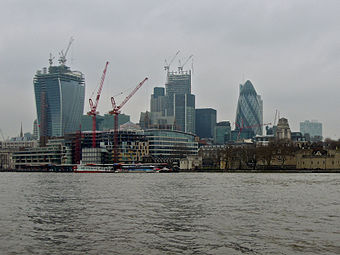
City of London from the Thames
Photo Wikipedia


Jane Lambert

The other day I received a copy of an email from our director of policy welcoming our "organization" to membership of the London Chamber of Commerce and Industry.  According to the Chamber's website it is the capital's largest independent networking and business support organisation representing the interests of thousands of companies, connecting over 500,000 business people  every year and offering a wide range of practical and professional services.

I have spent much of the morning exploring the website, particularly
I intend to make the most of our membership and participate in as many of those events as possible. It is a great opportunity to explain to business leaders what members of our profession can do for them (see IP Services from Barristers 6 April 2013 4-5 IP blog) and the different ways they can access our services from our workshops and pro bono clinics to our high level representation and consultancy.

Coincidentally, I downloaded and read yesterday Eddie Copeland and Cameron Scott's report Silicon Cities which is published by Policy Exchange. This report discusses how to support the development of tech clusters outside London and the South East of England. As I was born in Manchester and still live in the town where Last of the Summer Wine was shot (we actually have a real vineyard just outside by the way) that is a topic that is very dear to my heart. As I have argued elsewhere it is in the national interest to create a counterweight to London and this report suggests ways in which that can be done. But creating a counterweight does not mean creating a brake. On the contrary it means creating a partner for the capital.

I was pleased to read the Chamber's press release Time to give cities the powers to grow of the 9 July 2014:
"Having long campaigned for greater financial freedom for London, today's report represents a welcome indication that Parliament understands the benefits that fiscal devolution will bring to the capital, and England's other cities and regions."
I made exactly the same point in a question to Nick Clegg at the Leeds International Economic Conference a few days earlier (see "Power. Performance. Potential. Leeds Economic Conference" 5 July 2014 IP North West).  The idea of a North South divide in a country the size of Britain has always been absurd to me. It is good to see that we are all beginning to sing from the same hymn sheet at last.

Tuesday, 12 August 2014

What is Fintech? Will it be an Engine for Growth or a Seven Day Wonder?


Jane Lambert

Fintech is short for financial technology, that is to say payment systems, services, software and data analytics. According to Fintech The UK’s unique  environment for growth the industry is worth £20 billion with payments technology accounting for about half those sales. The same report states that the UK and Irish Republic are the fastest growing region for fintech and that £265 million was invested in the industry in 2013.

As a result of this investment boom there has been growing interest in fintech from government and investors. In a speech to Innovate Finance at Level 39 on 6 Aug 2014 the Chancellor of the Exchequer announced several new measures to encourage investment in fintech.  On 2 July 2014 Santander announced that it had set up a $100 million investment fund in London. There are now all sorts of fintech enterprises which are monitored by such companies as FinTechCity which publishes the annual Fintech 50.

Although London is an important market for financial technology it is important to note that there were only 3 British firms in 2013 FinTech 100 Rankings Released By IDC Financial Insights, American Banker, and Bank Technology News compared to 10 from India and many more from the USA. On page 11 of The Boom in Global Fintech Investment A new growth opportunity for London Accenture London identified the following challenges for London's fintech cluster:

  • London's fintech industry is relatively immature;
  • there are many first more time entrepreneurs than elsewhere in the world
  • it is harder for them to raise funding than their US counterparts.
In How far (if at all) is it possible to protect Innovation in Financial Technology? 12 Aug 2014 IP Yorkshire I spotted yet another difficulty, namely that it is much harder to obtain patent protection for fintech inventions than it is in China, Japan, Korea and the USA.

Interest in fintech has mushroomed and could subside just as quickly but until it does I shall be keeping an eye on the legal issues and particularly IP relating to this technology.  The name fintech is new but I have followed the topic ever since the early 80s when I was legal advisor to VISA for Europe, the Middle East and Africa. I wrote one of the first articles on the subject in EFTS: the Emerging Legal Issues LSGaz 1984 and I contributed a section on electronic banking to Butterworths Encyclopaedia of Forms and Precedents in 1985. If there is sufficient interest in the legal issues relating to fintech I shall try to hold a workshop or seminar on the topic in chambers. In the meantime here is a reading list which I shall no doubt extend from time to time. If anybody wants to discuss this article or the law relating to fintech in general he or she can call me during office hours on 020 7404 5252 or message me through my contact form. You can also tweet me, write on my wall or send me a message through G+Linkedin or Xing.

Further Reading

General Introductions
FinTechCity  The FinTech 50 (downloadable from Welcome to The FinTech 50)
IPC Financial Insights and others 2013 FinTech 100 Rankings 7 Nov 2013

Press Releases
Santander  "Santander to launch a $100M fund for fintech companies out of London" 2 July 2014

Speeches
George Osborne "Chancellor on developing FinTech"  6 Aug 2014

Intellectual Property

Articles

Presentation

Wednesday, 16 July 2014

London is Number 1 in the UK for Branding and Design

Piccadilly Circus at Night
Source Wikipedia


Jane Lambert

The Intellectual Property Office's Facts and Figures 2012-2013 were published last month and they make interesting reading. Businesses in London applies for 12,669 UK trade marks (up from 10,440 the previous year) and received 10,583 registrations (8,680 the previous year). That is more than any other region of the United Kingdom. The South East came second with 6,197 applications and 5,258 registrations and the East of England third in the number of applications (3,227) and the South West in the number of registrations (2,951).

London was also top in the number of registered design applications (1,153 compared to the South East's 1.066) but second to the South East in the number of registrations (720 in 2013 compared to the South East's 883).

London came second to the South East in the number of UK patent applications (2,588 in 2013 compared to 2.522 the previous year thereby bucking the national trend) and grants (346 in 2013). The comparable figures for South East England were 2,822 applications and 346 grants.  

We can assist London artists, designers, inventors, entrepreneurs and investors with our IP clinics at Middlesex University and our talks and publications all of which are free of charge. For our chargeable services see "IP Services from Barristers" 6 Apr 2013 4-5 IP.  If anyone wants to discuss his article or any patent, trade mark, design or other intellectual property matter he or she should call us on 020 7404 5252 or get in touch through my contact form. You can also tweet me, write on my wall or send me a message through G+, Linkedin or Xing.

Sunday, 13 July 2014

Computer Law - Things aint what they used to be

Manchester Mark 1 - one or the world's first computers
Source Wikipedia


Jane Lambert

When I was first called to the Bar I was a very rare bird indeed: a barrister who knew something about computers. I did not know all that much for I did not read computer science at university but I knew more than most having been one of the first children on the School Mathematics Project which taught binary and hexadecimal arithmetic, set theory and groups, linear programming and Boolean algebra. I set up a mathematical society and participated from time to time in a club that made things including a simple computer in 1965. I was encouraged to take an interest in computing by my father who had seen Manchester Mark 1 when he was a research student at Manchester University. I maintained my interest when I was an undergraduate at St Andrews and a graduate student at UCLA. Indeed I think I must have sent one of the world's first emails when I requested a book from the UC Berkeley library in 1972 or 1973 for I later found out that both UC campuses had participated in the DARPANET which was the forerunner of the Internet. In my first job at the Economist Intelligence Unit I learned about remote sensing when I assisted in one of the early projects in that technology. I was one of the early adopters of micro-computer technology having bought myself a Commodore 64 which nearly sent the TV up in smoke as I was setting it up and later an Amstrad 8256 on which I taught myself to write simple programs. I joined the British Computer Society as an affiliate at about that time and rather fancied that if I ever failed at the Bar I could retrain as a systems analyst or at least a programmer.

In the early days before the Worldwide Web when home computing was in its infancy computer law was simple. It was mainly about computer procurement though there were occasional disputes over copyright and the development of the first computer networks gave rise to concern in a number of countries over privacy. Procurement was a matter for businesses because only big companies, governments and a few other public sector institutions could afford computers. Most disputes like MacKenzie Patten & Co. v. British Olivetti Ltd 19 May 1984 in the UK and Chatlos Systems, Inc. v. National Cash Register Corp., 635 F.2d 1081 (3d Cir. 1980) in the USA arose from a mismatch between customers' unrealistic expectations and salesmen's extravagant claims. Looking back at my old textbooks from the early 1980s such as Colin Tapper's Computer Law, Morgan and Stedman on computer contracts and Michelle Rennie's precedents I recall how we used to divide computer contracts into hardware, software, hardware maintenance, software maintenance, bureau processing and turnkey contracts. We agonized over whether software was a good and whether liability for breach of contract could be excluded from the Unfair Contract Terms Act 1977 under para 1 (c) of Sched 1 on the basis that a software contract was a software licence.

The arrival of the Internet changed all that. The public are better informed about computers and know what computers can and cannot do. A lot of software including applications used by businesses for word processing, spreadsheets, databases, email and presentations are now free at the point of use or cost very little. Save for big ticket public sector procurements which still somehow seem to go wrong computer supply disputes hardly ever arise because much of the processing takes place remotely and most applications - particularly those that are free or open source - are expendable and easily replaced if they fail to meet expectations. The sort of contracts that I am asked to draft or review nowadays tend to relate to e-commerce and the Internet. The big ticket disputes involving the public sector to which I referred earlier tend to be resolved through negotiation, mediation and other methods of alternative dispute resolution. It is several months since I last settled particulars of claim in a computer supply dispute in the Technology and Construction Court.

An area that still seems to lead to disputes is web design. In 2011 and 2012 I wrote a series of articles for web designers and their customers which I posted on J D Supra:
I have had a look through those articles and find they are still relevant though some details need to be updated. For instance, the Patents County Court has been replaced by IPEC (the Intellectual Property Enterprise Court) and IPEC has a small claims track whose procedure I discussed in "How to bring or defend a small Intellectual Property Claim in the Intellectual Property Enterprise Court" 11 May 2014 and "How to take proceedings in the IPEC Small Claims Track"  12 July 2014.

Should anybody want to discuss this article or any of he topics mentioned or referred to call me on 020 7404 5252 during normal business hours. You can also contact me through my contact form or message me through Facebook, G+, Linkedin, twitter or Xing.